
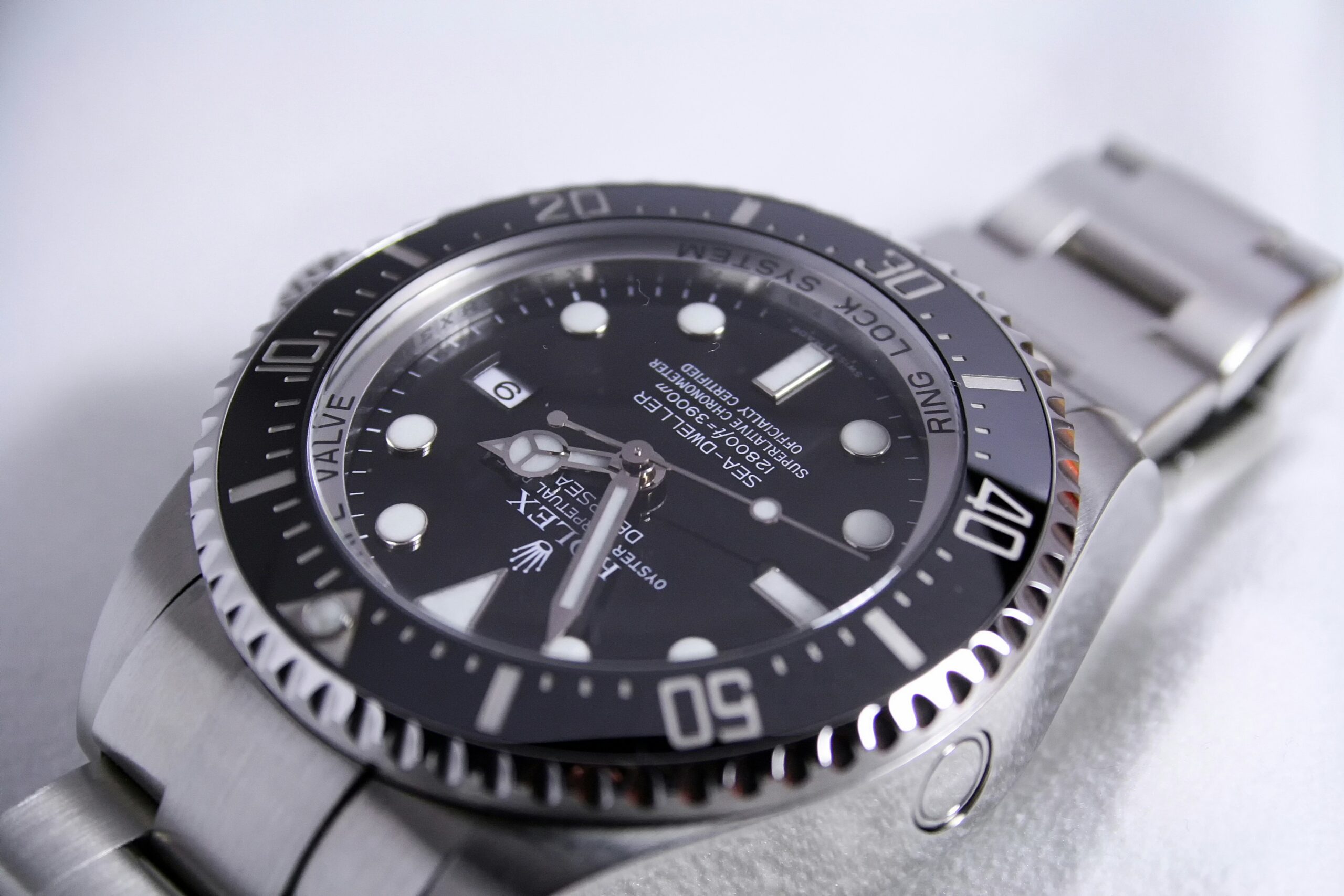
A luxury watch is much more than a simple instrument for telling time; it is an intricate mechanical work of art that reflects a rich heritage of craftsmanship and precision, embodying the identity of its owner. To be classified within the realm of luxury and high quality, a timepiece undergoes rigorous standards—beginning with the selection of raw materials and ending only at the finest details of hand-finishing.
1. Premium Raw Materials: The Foundation of Durability and Elegance
Luxury watchmaking avoids ordinary metals, opting instead for superior materials that guarantee longevity and a stunning appearance:
- Precious Metals: Such as solid gold (yellow, rose, and white 18-karat) and platinum, which is renowned for its exceptional durability and rarity.
- High-Grade Stainless Steel: Leading brands utilize special alloys like 316L steel or super-resistant 904L steel for superior corrosion resistance, scratch resistance, and a unique luster.
- Advanced Materials: High-tech ceramics, lightweight yet ultra-durable titanium, and carbon fiber offer unprecedented lightness and outstanding shock resistance.
- Sapphire Crystal: Used to protect the dial, it is entirely scratch-resistant, with a hardness surpassed only by diamond.
2. Precision Performance and Mechanical Movements
The beating heart of a watch determines its true value and lifespan:
- Horological Complications: Luxury watches are predominantly mechanical (manual-wind or automatic), featuring breathtaking complications such as the tourbillon, perpetual calendar, and dual-time/GMT functions.
- Standard Certifications: High-end timepieces undergo stringent precision testing to earn certifications like the COSC (Official Swiss Chronometer Testing Institute) certificate or house-specific quality seals like the Geneva Seal.
- Magnetic Resistance: Modern movements incorporate silicon components to shield the watch from everyday magnetic fields that affect precision.
3. Hand-Finishing and Fine Craftsmanship
The core difference between an ordinary watch and a luxury timepiece lies in the “finishing,” which is often executed by hand by master artisans:
- Côtes de Genève (Geneva Stripes): Engraving parallel, wave-like stripes onto internal movement components to create a mesmerizing visual aesthetic viewed through a transparent case back.
- Hand-Beveling (Anglage): Polishing and chamfering the edges of bridges and gears at precise angles to brilliantly reflect light.
- Skeletonization: Open-working the dial and internal mechanism to reveal the gears working together in a stunning, intricate kinetic display.
4. Durability and Rigorous Quality Testing
A luxury watch only hits the market after passing a grueling battery of stress tests:
- Water Resistance: Tested under pressures simulating depths ranging from 30 meters to several thousand meters for professional dive watches.
- Shock Testing: Simulating drops and sudden impacts to ensure the integrity of the balance staff and internal mechanism.
- Aging Tests: Exposing the watch to extreme temperatures, humidity, and ultraviolet radiation to test the colorfastness and durability of materials.
5. The Small Details That Make All the Difference
Ultimate distinction always lies in subtle details that may not be immediately noticed at first glance:
- Watch Hands: Meticulously polished and occasionally crafted from gold or coated with high-grade luminescent material (such as Super-LumiNova) to ensure clear legibility in the dark.
- The Dial: Advanced techniques such as enamel painting, hand-guilloché engraving, or diamond-setting are executed with pinpoint geometric precision.
- Straps and Buckles: Perfected stitching on luxury natural leathers, or the design of flexible, wrist-conforming metal bracelets featuring secure and user-friendly clasp mechanisms.
Conclusion: Owning a luxury watch is an investment in a masterpiece passed down through generations. It encapsulates human dedication to the pursuit of perfection, merging complex engineering with exceptional visual beauty.
Would you like to learn more about the evaluation criteria for a specific brand or explore a comparison between different types of mechanical movements?